

How to Make Foamy Turkish Coffee: Ratio and Technique
The short answer to how to make foamy Turkish coffee is this: put flour-fine ground coffee into the cezve with cold water, heat it slowly on low heat without stirring, and take it off the heat the moment foam appears at the edges and the coffee starts to rise. If you spoon the foam into the cups first and heat the cezve for another 10-15 seconds before pouring over it, the foam reaches the table intact. When the grind fineness, the water-to-coffee ratio, and how low the heat is are all right, the foam forms on its own; the steps below walk through these three variables one by one. At every step, watch rather than rush: the coffee comes off the heat based on how it looks in the cezve, not a fixed number of minutes.
Getting the Grind and Ratio Right
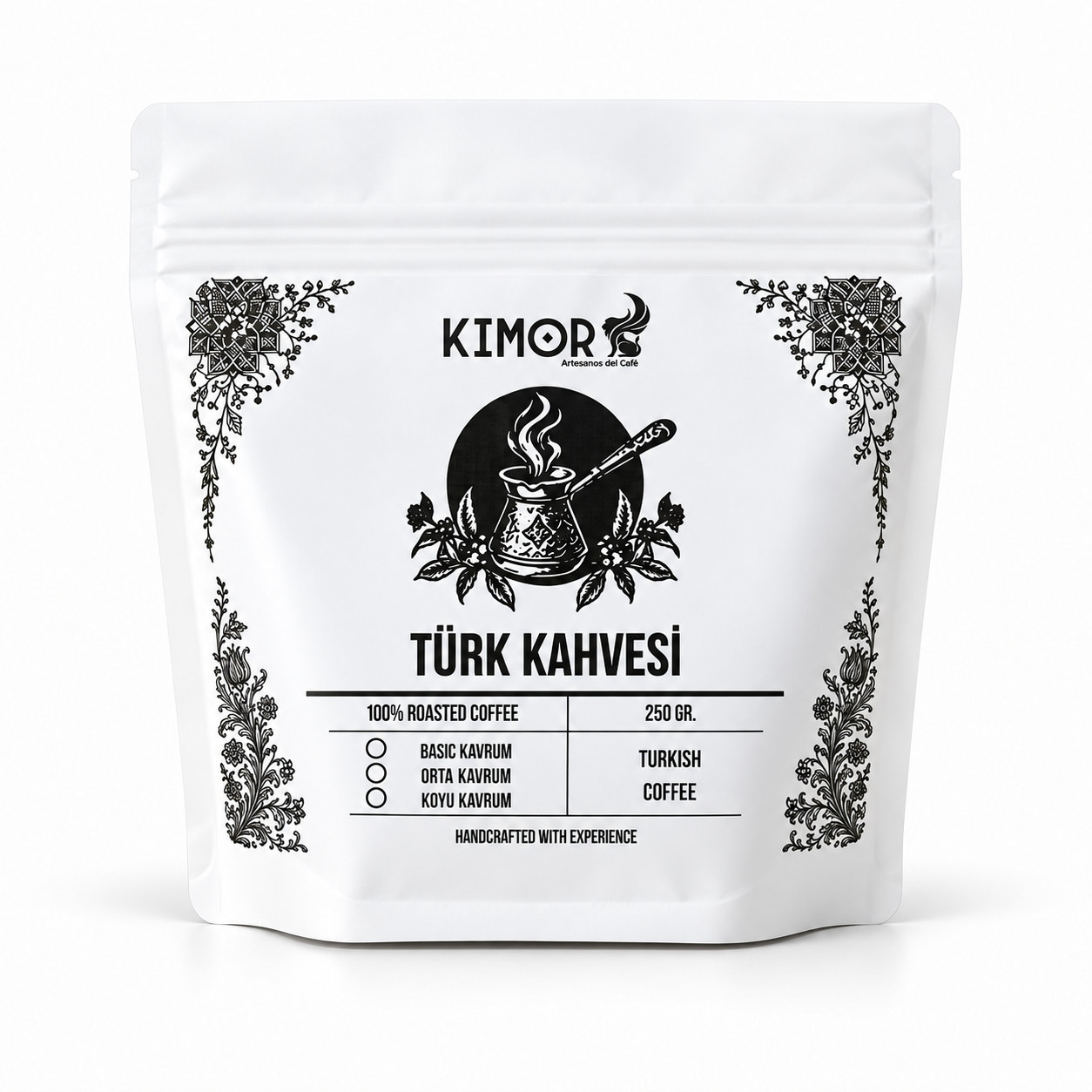
Turkish coffee needs the finest grind of any known brewing method; finer than even espresso grind, it should feel like flour or powdered sugar. Rubbing it between your fingers should give no sense of grit at all; if you can feel grains, the grind is too coarse and the fine dust particles that hold the foam fall short, so instead of thickening inside the cezve the foam stays as a thin, scattered layer. The ratio matters just as much: the common measure cited by Coffee Science Foundation director Peter Giuliano is 1 heaping coffee spoon (about 7 grams) of coffee per 1 Turkish coffee cup (about 70 ml) of water, which works out to roughly a 1:9 to 1:10 ratio by weight. This fineness is the source of the foam: once coffee is powder-fine, the surface area it exposes to the water grows enormously, which both dissolves it quickly and leaves a thin, dense layer on the surface that holds the foam; a coarse grind never creates that same surface area, so no foam forms. Kimor's Turkish coffee line is sold pre-ground to this fineness for the cezve; if you have your own grinder, you can buy whole beans and grind them to that fine setting yourself, though most home grinders can't reach it, which is why pre-ground coffee gives a more reliable result. If you want to compare grind size across brewing methods, Kimor's grind guide explains in detail which fineness each method needs.
Cold Water and Low Heat
The cezve is always filled with cold, clean drinking water — never lukewarm or hot; cold water extends the cooking time, which lets the coffee heat up gradually and lets the foam build up and thicken on the surface. After the coffee, water and any sugar go into the cezve, stir once before putting it on the heat so the coffee disperses into the water; once the cezve is on the heat, don't stir again, because stirring breaks up the foam skin that's starting to form and it won't gather back to the same thickness. Keep the heat as low as possible: high heat boils the coffee quickly, bursts the foam, and mixes the grounds into the water, while low heat lets the coffee warm up slowly and build a thin ring of foam at the edges. This slow warming varies with the size of the cezve and the stove but usually takes a few minutes; a rushed cezve of coffee comes out foamless, bitter, and full of grounds. This is also the biggest difference between Turkish coffee and other brewing methods: in filter coffee or espresso, the water is heated first and then meets the coffee, while in Turkish coffee the goal is to gradually heat the coffee itself inside the cezve, not the water.
Building the Foam and Sharing It Between Cups
As the cezve sits on the heat, the foam that appears at the edges spreads across the surface and the coffee starts to rise; at exactly that point, before it boils over, the cezve comes off the heat. The foam that has formed is gently lifted out with a spoon and shared evenly between the cups that will be served; leaving the foam for last and pouring it straight along with the coffee makes the foam distribute unevenly between cups, leaving one cup with none. Once the foam has been shared between the cups, the cezve goes back on the heat for another 10-15 seconds so the coffee rises a second time; just before this second rise boils over, the cezve comes off the heat and the coffee is poured slowly along the edge of each cup, so the foam already in the bottom of the cup stays intact as a thin layer on top. This two-stage rise is also the practical way to distribute an equal amount of foam to every cup without boiling the cezve over in one go. Once the cups are full, it's worth letting the coffee rest for about a minute instead of drinking it right away; during that minute the grounds settle to the bottom, the foam stays on top, and the first sip comes out smooth.
Common Mistakes and How to Fix Them
The most common mistake is using a coarsely ground coffee; a grind you can feel grains in won't foam no matter how carefully you cook it, because what holds the foam is exactly those fine dust particles. The second mistake is starting with hot or lukewarm water: this shortens the coffee's cooking time, so it boils before the foam has had time to thicken. The third mistake is stirring the cezve once it's on the heat; this breaks up the foam skin that's starting to form. The fourth mistake is pouring the coffee without sharing the foam between the cups first; in that case the foam collects in whichever cup is poured first, and the rest come out with none. Finally, letting the coffee boil and sit on the heat for too long kills the foam and mixes the grounds into the cup; the coffee should come off the heat the moment it foams and starts to rise at the edges, and never be cooked further. The sixth mistake is stirring the foam with a spoon or blowing on it once it's in the cup; that motion kills the foam instantly, and foam is only preserved through the sharing and second-rise steps described above. When you try the basic, medium and dark roast options in Kimor's Turkish coffee line, keeping the grind, ratio and heat steps above constant lets you tell whether a difference in the cup comes from the roast or from the technique itself.