

Comparing two recipes with the same coffee
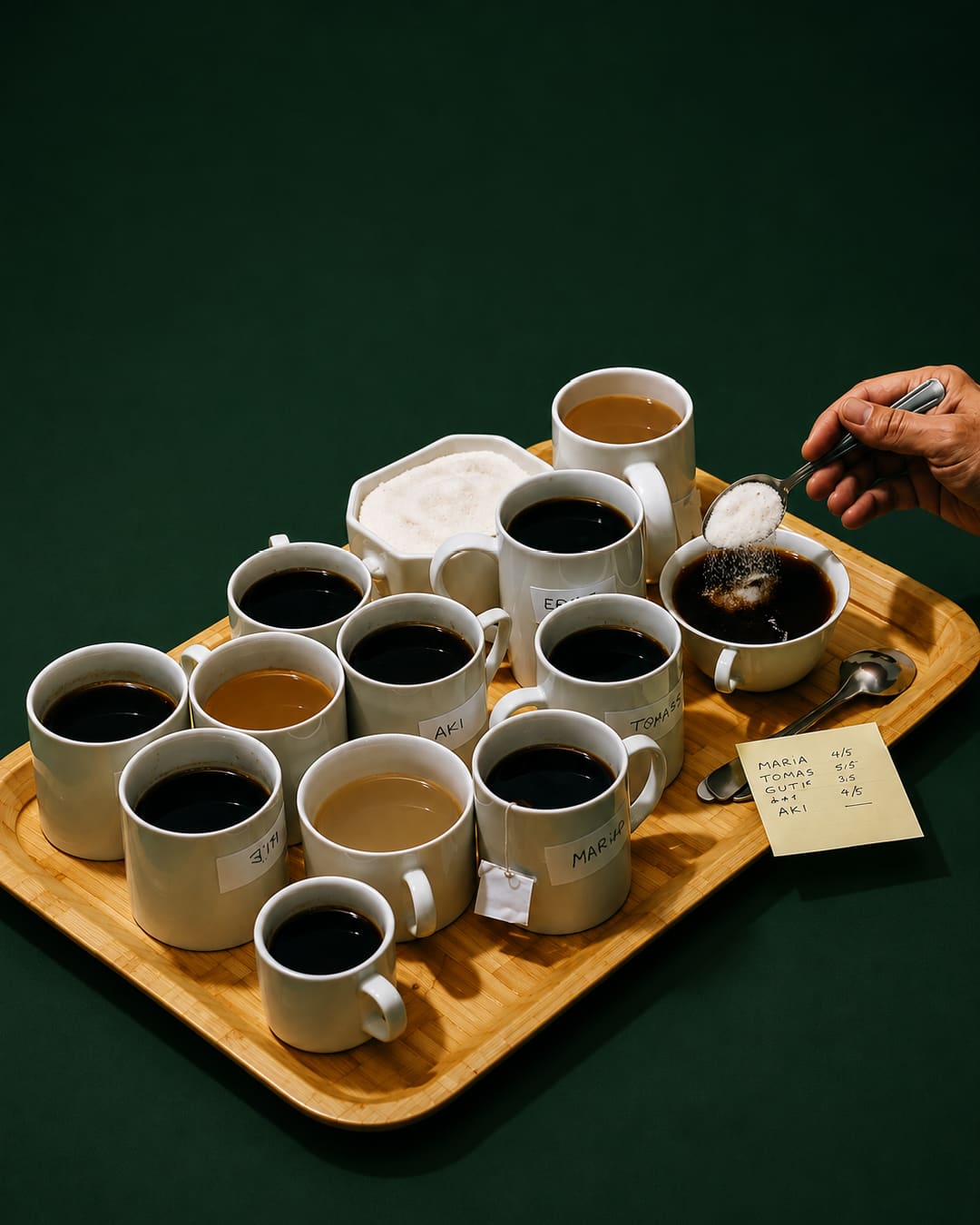
When choosing between two recipes you found online, first define your intended use: black coffee in the morning or coffee with milk at breakfast? Use the same bag of coffee and label the recipes A and B. The aim is to see how each complete recipe fits your routine, rather than explain the effect of every variable.
Write down each recipe's dry coffee dose, added water, grind setting and pouring steps. The James Hoffmann one-cup V60 recipe published by Hario uses 15 grams of coffee and 250 grams of water; this is a documented starting example, not an ideal ratio for every coffee. Record the other recipe in full too. Keep water added during brewing separate from the beverage weight measured in the cup.
Use the same equipment and water while preserving the differences required by each recipe. If you miss a pouring step, note it instead of quietly correcting the result. When several steps differ, you cannot attribute your preference solely to grind size or ratio; you are comparing those two complete preparations.
If possible, ask someone else to code the cups and reveal the recipes after tasting. Take small alternating sips at similar temperatures and briefly describe perceived sweetness, bitterness, mouthfeel and overall preference. For example, 'A feels fuller; B is easier to drink with breakfast' offers more useful decision information than an unexplained score.
Reverse the brewing and tasting order in another trial. If the same preference returns, you can choose that recipe for daily use; if the difference is unclear, choosing the easier preparation is reasonable too. Record the effort involved alongside the recipe. Use Kimor's brewing guide when you need a reminder of the basic steps.