

What Is the Difference Between Arabica and Robusta Coffee?
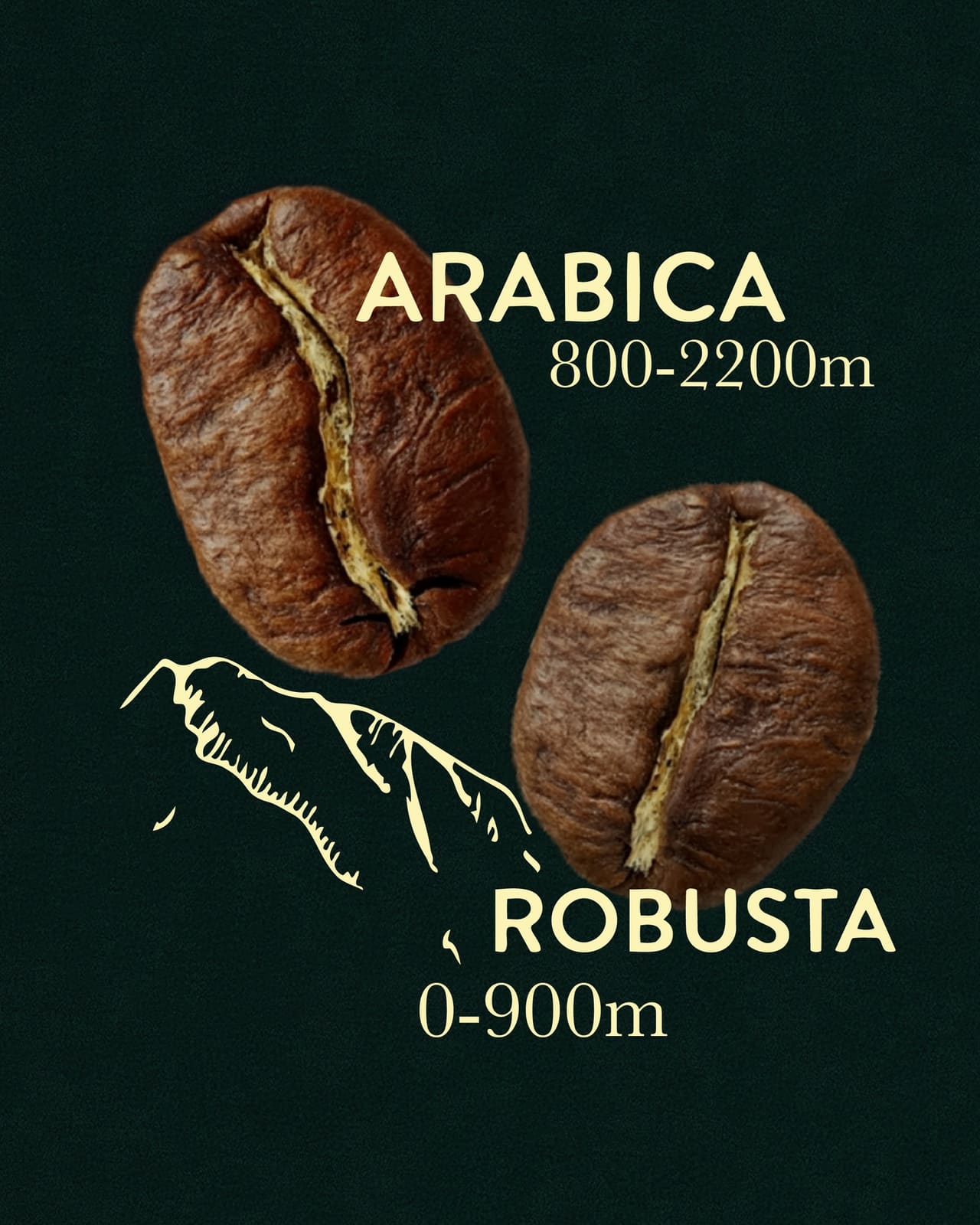
Arabica (Coffea arabica) and robusta (Coffea canephora) are two separate coffee species; the difference between them runs from caffeine content and flavor to growing altitude and price. In short, arabica is a species grown at higher altitudes, lower in caffeine, and more fruity and acidic; robusta is a species that can also grow at lower altitudes, has roughly double the caffeine, and has a harsher, more bitter taste. Around 60-70% of the world's coffee production comes from arabica, with the rest from robusta; nearly all coffee sold as specialty is arabica, while robusta shows up mostly in commercial blends and instant coffee. Although both belong to the same genus, Coffea, they are different species and are not interchangeable; as the ratio inside a blend changes, both the taste and the caffeine content of the coffee change too.
Flavor and Aroma Difference
When roasted, arabica produces a more complex aroma: floral, fruity and nutty notes come together with a bright acidity; because of this layered character, nearly all single-origin and specialty coffees are made from arabica. Robusta, on the other hand, has a flatter, harsher body, woody-earthy notes and a pronounced bitterness sometimes compared to rubber; brewed on its own, it doesn't offer arabica's finesse. In exchange, it adds a dark, thick crema and a heavier body to espresso, which is why some Italian-style espresso blends add it in small proportions; it is also the preferred choice in most instant coffee, both to lower cost and to give a harsher taste. It's worth keeping this difference in taste and body in mind when choosing a blend for filter or espresso; on Kimor's filter coffee page you can compare the blends' flavor notes and roast levels.
Caffeine and Plant Structure Difference
Even the chromosome count of the two species differs: arabica is tetraploid (2n=44), while robusta is diploid (2n=22) — this genetic difference shapes many traits of the two species, from bean size to disease response. On the caffeine side, sources don't give the exact same figure, but the overall trend is clear: by dry weight, caffeine content in arabica beans measures around 1.2-1.5%, while in robusta it can reach 2.2-2.7% — meaning robusta contains roughly twice as much caffeine as arabica. In practice, this means a blend with a high robusta ratio, or instant coffee, carries more caffeine and a more pronounced bitterness than the same amount of arabica coffee; for anyone adjusting their brew ratio or number of cups accordingly, this difference isn't small enough to ignore. This is why the caffeine in an espresso shot or a filter brew changes not just with dose and water, but also with the arabica-robusta ratio inside it.
Growing Conditions: Altitude and Disease Resistance
Because it prefers a cool climate, arabica is generally grown at high altitudes between 800-2,000 meters; this altitude lets the beans ripen slowly and lets a more complex aroma develop, but it also makes the plant more fragile against fungal diseases like coffee leaf rust (Hemileia vastatrix) and frost risk. Robusta, meanwhile, grows without trouble in warmer, more humid regions below 800 meters, is more resistant to disease and drought, and also gives a higher yield; a single tree can produce more beans than an arabica tree. This difference in hardiness and yield is the main reason robusta's production cost, and therefore its price, generally stays lower than arabica's; for an arabica grower, the extra labor, shading and disease monitoring required also add to the final price.
How to Tell Arabica and Robusta Apart on the Label
A bag labeled '100% Arabica' is generally used as a mark of quality, because growing arabica is more laborious and costly; in blends that contain robusta, the ratio usually isn't stated directly and varies from brand to brand. There's also a visual difference at the green bean level: arabica beans are more oval, with a curved center crease; robusta beans are rounder and smaller, with a straighter center crease. Telling them apart by eye is harder once roasted, since roast color and oiliness can look similar in both species; the most reliable approach for a consumer is still to check the species and origin information on the bag, and to ask the brand directly if it's unclear. In cheap bags that just say 'coffee' and are priced noticeably lower, a high robusta ratio is more likely, since it lowers cost.
Where Arabica Shows Up at Kimor
The Turkish coffee line is made from arabica beans sourced from Brazil and Colombia; its three roast levels (basic, medium, dark) offer the same arabica base in different roast profiles, available either ground or as whole beans. Knowing the difference between arabica and robusta makes it easier to understand why the coffee you see on a bag's label or a café's menu has a particular taste and caffeine profile: if you're after an acidic, fruity filter coffee, you're looking for arabica; if you're after an intense, harsh espresso crema, you're looking for a blend with a small amount of robusta added. On Kimor's coffee page you can compare the flavor notes and roast levels of the filter and espresso blends; anyone curious about the origin of this difference and coffee's journey around the world can also take a look at the article on coffee's short history.