

Whole Bean Coffee or Ground Coffee?
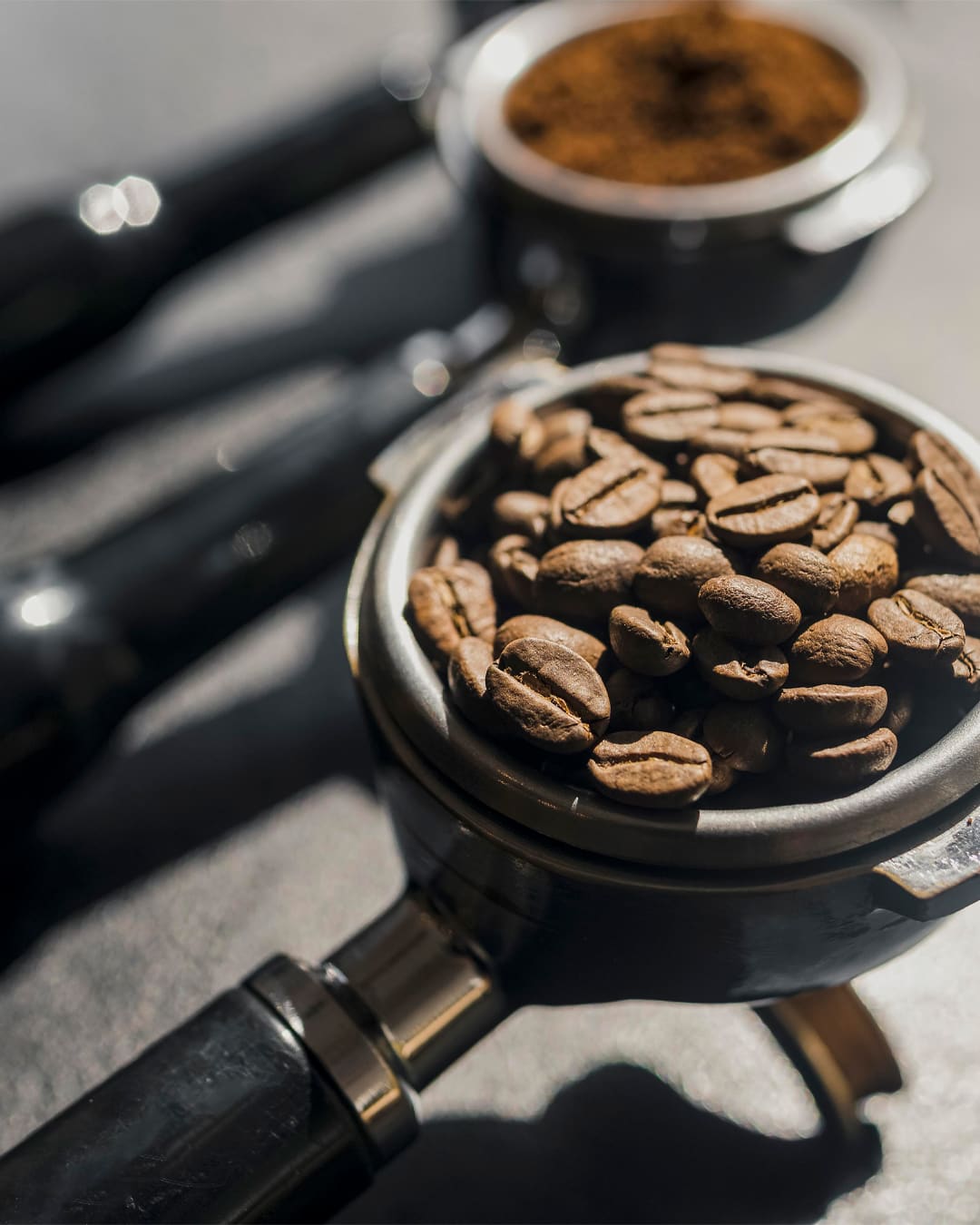
If you have your own grinder and time to grind right before each brew, whole bean coffee gives a better result in terms of freshness; if you don't have a grinder or want speed, ground coffee matched to your equipment makes little practical difference. The real issue isn't lab-level precision but the surface area that meets the air: ground coffee starts losing aroma within minutes, while whole bean coffee, stored properly, lasts for weeks.
Why whole bean coffee stays fresh longer
After coffee is roasted, the carbon dioxide inside it escapes slowly; this process is called degassing, and it carries some aroma compounds along with it. According to the Specialty Coffee Association's literature review on coffee staling, grinding increases the coffee's porosity and surface-to-volume ratio, which speeds up degassing and oxidation. In other words, the staling rate is directly tied to the exposed surface area: a whole bean's contact with air is limited to its skin, while in ground coffee every particle exposes its own surface, which also makes aroma compounds escape much faster.
In practice, this means the two age at different speeds. Whole bean coffee releases its carbon dioxide slowly over days, while the same coffee, once ground, compresses that process into minutes; some sources describe this acceleration as thousands of times faster, though sources don't agree on the exact figure. What matters isn't the number but the direction: grinding can't turn back the coffee's clock, it only speeds up the staling process. So the earlier you grind your coffee, the earlier it starts leaving its peak aroma behind. The one-way valve on whole bean bags also manages this process to some extent: it lets the carbon dioxide the coffee produces escape while making it harder for outside oxygen to enter the bag.
According to the National Coffee Association's storage guide, coffee's four enemies are air, moisture, heat, and light, which is why it recommends keeping it at room temperature in an opaque, airtight container. The same four factors act much faster on ground coffee because its contact surface is larger: an opened ground coffee package can turn dull within days, while a well-sealed whole bean package can stay lively for weeks. Sources don't agree on an exact day count, so instead of giving a specific number, it's more reliable to read the direction correctly: the earlier coffee is ground, the faster it stales.
What's the practical advantage of ground coffee
The real gain of ground coffee is speed and consistency: without buying a grinder, you can start brewing directly with coffee ground to the right fineness for your equipment. At Kimor this matching is done by equipment — a medium-fine paper filter grind for paper-filter methods like V60 and Chemex, a coarser metal filter grind for metal-filter equipment like French press, and a fine espresso grind for moka pots and espresso machines. Moka pot and espresso machine share the same grind, so you don't need to look for a separate option for either.
The most common mistake when using a grinder is choosing a fineness that doesn't match the method: coffee ground too fine for French press leaves sediment in the brew, while coffee ground too coarse for espresso lets water pass through too fast and gives a watery result. Ready-ground coffee removes this risk because the fineness already comes matched to the method. If you want to compare grind fineness across methods, the grind guide shows side by side which equipment matches which fineness.
Which one should you choose, and when
The choice really depends on your habits. If you brew daily and have a grinder at home, buying whole bean coffee makes sense: you grind only what you need each time and keep the rest sealed, which keeps freshness loss to a minimum and lets you try different methods with the same beans. If you don't have a grinder, run a space several people use — like an office coffee corner — or aren't sure which fineness to pick, ground coffee matched to your equipment leaves less room for error and gives every user the same result.
If you brew rarely, the balance shifts too: a grinder used once a week needs upkeep, and if it's rarely cleaned, its own residue can spoil the coffee's taste. At that frequency, buying ground coffee in small packages reduces both grinder upkeep and freshness loss at the same time. If you can't decide which grind suits you, the Find Your Grind tool answers it with a single question.
Whole bean and ground options at Kimor
Kimor's filter coffees are sold with whole bean, metal filter, and paper filter grinds; espresso coffees come with ground espresso and whole bean options. Turkish coffee follows the same axis: all three roast levels can be ordered as whole bean or ground, with the same package and label — only the form shipped changes. Whichever product you choose, the grind option is set right on the product page while ordering; you don't need to go to a separate page.
Proper storage narrows the gap
More important than which grind you choose is how you store the coffee after buying it. Keeping both whole bean and ground coffee away from air, light, and heat in a tightly sealed container is the single step that extends freshness the most; a spot right next to the stove or a window in the kitchen is not a good choice for this reason. Refrigerating it is generally not recommended because it raises the risk of moisture. For details on storage containers, environment, and how soon to use coffee after opening, you can check our how to store coffee beans article.