

How to Read Coffee Tasting Notes
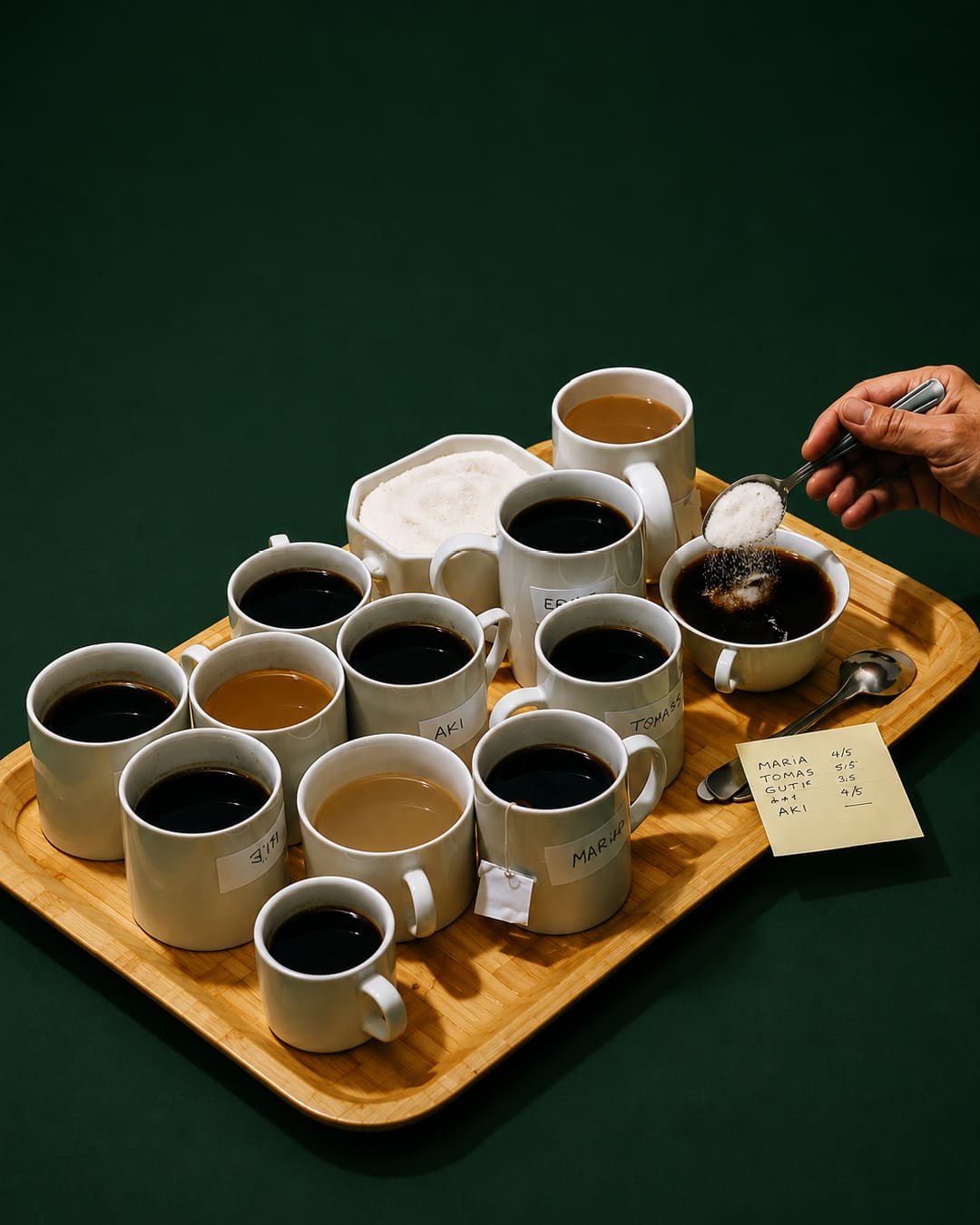
The "chocolate", "strawberry" or "bergamot" notes printed on a coffee bag don't mean that fruit or spice was added to the coffee. The volatile compounds that form inside a roasted bean are close enough to the compounds found in those everyday foods that our nose and palate recognize them in a similar way. The roaster smells and tastes the cup, picks the three or four most noticeable notes, and prints them on the bag; the choice depends on the coffee's origin, processing method, and roast level. The same note can show up on a completely different blend from another brand too; what matters isn't a single word but the overall profile the notes draw together. Once you learn to read these notes correctly, you can anticipate which bag on a crowded shelf is closer to your palate just from the note list.
What do tasting notes actually mean?
The shared reference point for coffee tasters worldwide is the Specialty Coffee Association's (SCA) Coffee Taster's Flavor Wheel; the wheel starts from broad families (fruity, chocolatey, spicy, roasted, floral, and so on) and narrows toward the center into a tighter subgroup, ending on the outer edge with a single concrete note — for example, from the fruity family to citrus, and from citrus to grapefruit. The three words printed on a bag are usually picked from the outer ring of this wheel and summarize what the coffee "resembles". You don't need to memorize the whole wheel, because its purpose is to be a shared vocabulary that aids memory, not a list to invent from; it offers a concrete comparison instead of vague adjectives like "premium" or "strong". So when comparing two coffees, asking "which family is this closer to" gets you to a preference faster than asking "which one is better".
Where notes come from: roast level and processing method
Even the same bean produces different notes depending on how it's roasted, because sugars and amino acids break down under heat during roasting and form new volatile compounds. In a light roast, the bean's own acidity and fruity side are suppressed less: Kimor's light-roasted Amazon blend carries grapefruit, nutmeg, and hibiscus notes, and this fruity side comes through brightest in a filter brew. In a dark roast, sugars caramelize and roasted, spicy, tannic notes take over: the dark-roasted Midnight blend gives walnut, tangerine, and black pepper, while the equally dark-roasted Safari blend carries roasted cocoa, almond, and white pepper. In the medium-roasted Morning blend, the warmth of dark chocolate and roasted hazelnut is balanced by kumquat's lively acidity — a good example of a profile sitting between the two extremes. The choice of these three or four notes isn't arbitrary: the notes listed for each blend represent the side of that blend that comes through consistently in both filter and espresso, no matter how the brew method or grind size changes.
Why does the same coffee taste different depending on the brew method?
The notes on a bag depend not only on the bean but also on the brew method, because filter and espresso water extract different compounds from the bean at different intensities. In the Midnight blend, espresso concentrates the body and pulls the notes closer together, while in a filter brew the walnut and tangerine read more clearly as separate notes. In the Morning blend, filter brings out the kumquat's acidity, while espresso brings out the weight of the chocolate and hazelnut. So the notes printed on the same bag can shift a little depending on which method you brew with; that is normal and not a flaw in the coffee, just two different windows onto the same bean.
Practical ways to notice tasting notes at home
Telling notes apart isn't a talent, it's a habit. Tasting a coffee hot, warm, and slightly cooled separately helps different notes come forward, because some volatile compounds become more noticeable as the temperature drops. The loud slurping technique used in professional cupping spreads the coffee as a fine mist across the mouth and makes it easier for the aroma to reach the nose; at home you can get a similar effect by drawing the sip in and holding it for a moment. Tasting two different blends back to back at the same temperature also makes it easier to tell notes apart — for example, trying the light-roasted Amazon next to the dark-roasted Midnight makes the difference between fruity and roasted notes obvious. Keeping a short note of which coffee showed which note, and how strongly, also helps you build your own flavor map over time.
How should you choose based on the notes on a bag?
When reading a note list, it's enough to first look at the general family: fruity and floral notes point to a bright, acidic, light-bodied coffee, while roasted, nutty, and spicy notes point to a heavier-bodied, lower-acidity profile. If you enjoy citrus or floral notes, you may lean toward light-roasted blends; if you enjoy chocolate and nutty notes, you may lean toward dark-roasted blends. For a more detailed comparison of how roast level changes the notes, you can read the difference between light roast and dark roast.
You don't need to know the notes by heart; what matters is noticing which family is closer to your own palate. If you'd like to match your own preference with a few questions, you can use the Find Your Coffee quiz to find a blend that fits your preferred notes. Over time you'll notice there isn't one single "best" note; which one you reach for can also depend on which blend you happen to be drinking that day.